
Plant-Extracted vs. Fermented Salidroside: A Purity and Cost Analysis for Formulators
An in-depth technical breakdown comparing traditional plant-extracted Salidroside with precision fermentation alternatives. We explore supply chain stability, purity profiles, and long-term cost benefits for nutraceutical brands.
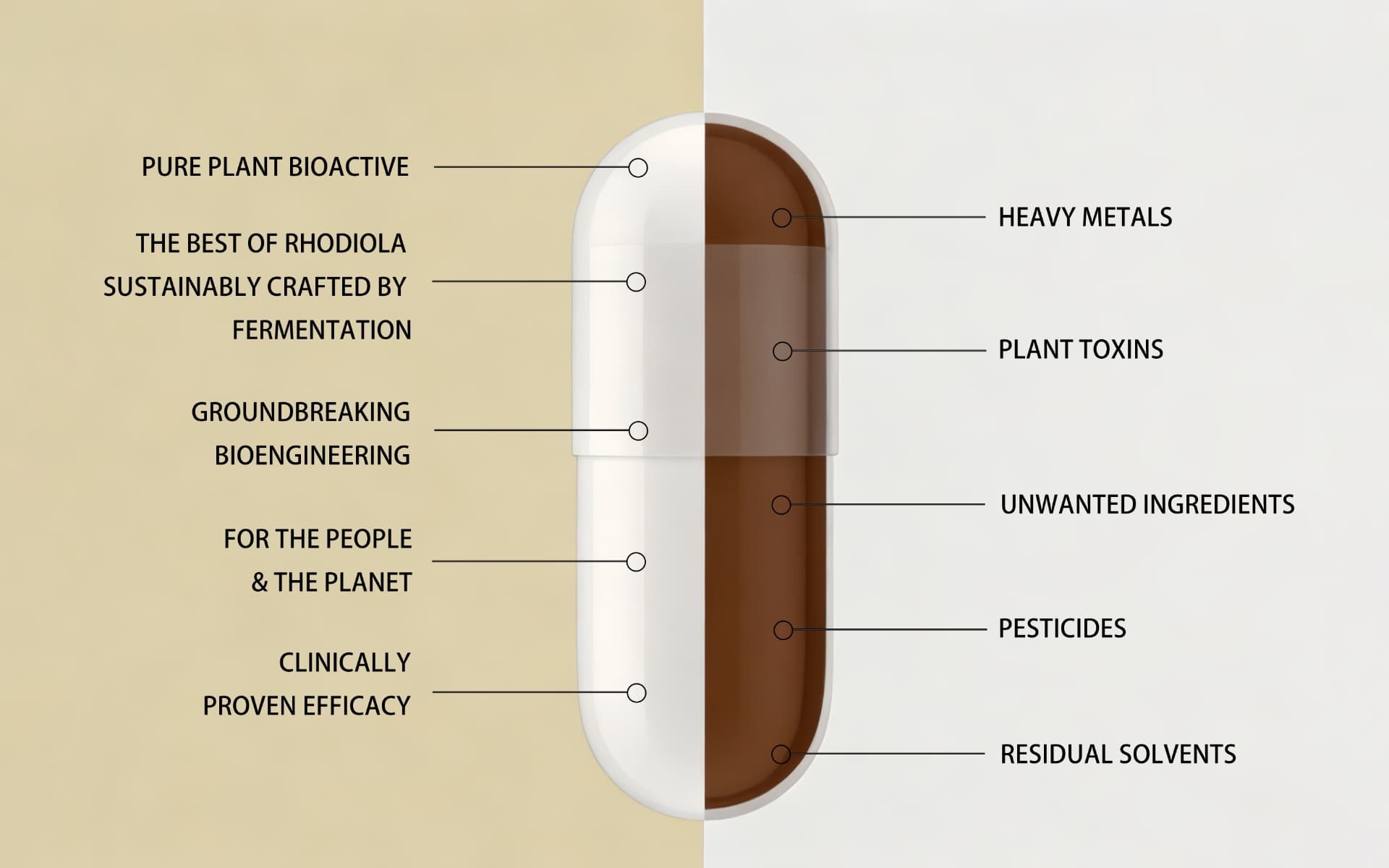
As the global demand for adaptogens surges, formulators face a critical bottleneck: the unreliable supply chain of traditional herbal extracts. Rhodiola rosea, the primary source of natural Salidroside, is facing rapid depletion and strict harvest quotas. This has forced forward-thinking supplement brands to evaluate a more sustainable, scalable alternative: precision fermentation-derived Salidroside.
The Flaws in Traditional Extraction
Historically, extracting Salidroside from Rhodiola meant dealing with multiple pain points:
- Inconsistent Active Levels: Weather conditions and soil quality cause severe batch-to-batch variations in the final extract.
- Heavy Metal & Pesticide Risks: Plant materials are highly susceptible to agricultural contamination, requiring expensive secondary purification steps.
- Price Volatility: With Rhodiola now listed as an endangered species in certain regions, raw material costs fluctuate wildly month-to-month.
The Precision Fermentation Advantage
At Morika Bio, we utilize advanced synthetic biology to produce Salidroside through precision fermentation. This method bypasses the agricultural supply chain entirely, offering three distinct advantages to bulk buyers:
1. Unmatched Purity (≥98%)
Unlike plant extraction, which yields a complex mixture of compounds requiring heavy solvent separation, precision fermentation produces Salidroside in a highly controlled environment. The result is an ultra-pure ingredient devoid of heavy metals, pesticides, and residual solvents.
2. Guaranteed Supply Chain Stability
Fermentation is completely independent of weather patterns, harvest seasons, and geopolitical export bans. For procurement teams, this means locked-in pricing and guaranteed lead times.
3. Favorable Cost-in-Use Metrics
While traditional high-purity plant-extracted Salidroside is expensive, engineered biosynthesis drives the cost down at scale and improves formulation economics.
Conclusion
For R&D directors building next-generation stress-relief and anti-fatigue supplements, relying on fragile botanical supply chains is no longer viable. Fermented Salidroside provides the same molecular structure with superior purity, stability, and pricing.
Need full technical package?
Contact our team for COA, TDS, and application suggestions.